
 By Harish
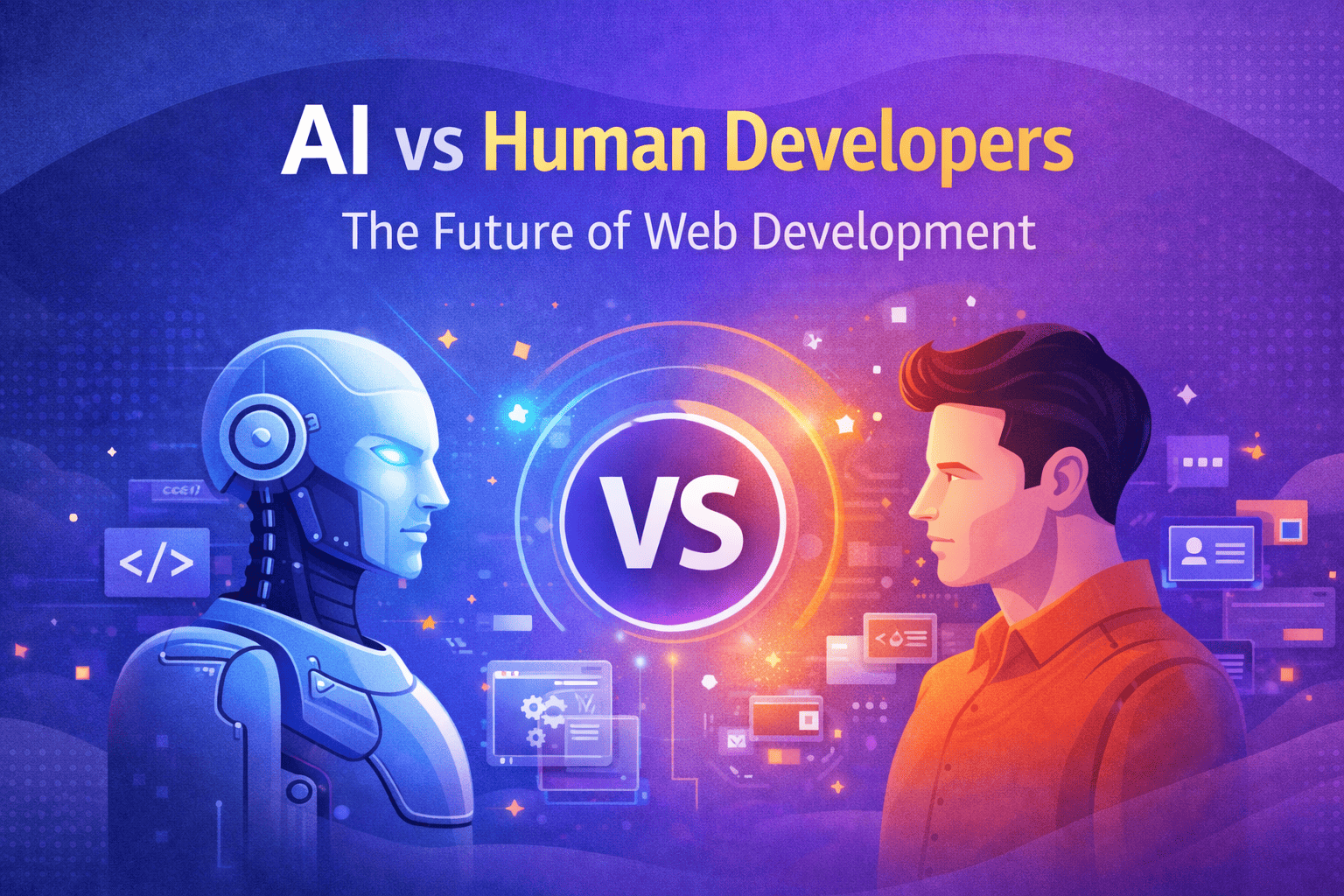
The rapid rise of artificial intelligence has sparked a global debate across industries, and web development is no exception. From AI coding assistants to automated website builders, machines are now capable of performing tasks that once required human expertise. This shift has raised an important question: AI vs Human Developers – who will shape the future of web development?
In 2026 and beyond, the collaboration between humans and machines will define how digital products are built. While AI in web development offers speed and efficiency, human creativity, strategy, and emotional intelligence remain irreplaceable. Let’s explore how this dynamic is evolving and what it means for businesses and developers.
Understanding AI in Web Development
AI in web development refers to using machine learning algorithms, automation tools, and intelligent systems to design, build, test, and optimize websites. From auto-generated code to smart UI personalization, AI-powered development tools are transforming traditional workflows.
Some common applications include:
- AI coding assistants like GitHub Copilot
- Automated bug detection
- Website builders with drag-and-drop AI features
- Predictive analytics for user behavior
- Chatbots and voice interfaces
These innovations significantly reduce development time and improve performance, making AI a powerful ally for developers.
AI vs Human Developers: Key Differences
1. Speed & Automation
AI automation in development enables rapid code generation, instant debugging, and faster deployment. Tasks that once took hours can now be completed in minutes.
Human developers, while slower, ensure quality, creativity, and logic that AI cannot fully replicate.
2. Creativity & Innovation
AI follows patterns and data, but humans think outside the box. User experience design, branding, and storytelling require emotional intelligence and originality.
This is where human vs AI developers become clear machines execute, humans innovate.
3. Problem-Solving
AI can suggest solutions based on existing data. However, complex project challenges, business logic, and ethical decisions still require human judgment.
Will AI Replace Web Developers?
One of the most searched questions today is: Will AI replace web developers?
The short answer: No – but it will change their roles.
AI will not eliminate developers but will redefine their responsibilities. Developers will shift from repetitive coding tasks to:
- Strategic planning
- System architecture
- UX design
- AI model supervision
- Security and compliance
Instead of replacing jobs, AI creates new opportunities for skilled professionals.
Benefits of AI for Developers
The benefits of AI for developers are undeniable:
1. Faster Development
AI coding assistants generate boilerplate code instantly.
2. Error Detection
AI identifies bugs before deployment, reducing crashes.
3. Data-Driven Decisions
Machine learning predicts user behavior to optimize UX.
4. Workflow Automation
Routine tasks like testing and deployment are automated.
5. Personalized Experiences
AI customizes content based on user preferences.
These advantages allow developers to focus on creativity and strategy.
Role of AI in Software Development
The role of AI in software development extends beyond web projects:
- Automated testing
- Predictive maintenance
- Intelligent debugging
- Code refactoring
- Smart documentation
AI improves software quality while reducing development costs.
Challenges of AI in Web Development
Despite its power, AI is not perfect. The challenges of AI in web development include:
1. Data Dependency
AI requires large datasets, which may contain bias.
2. Limited Creativity
AI cannot truly think creatively or emotionally.
3. Security Risks
Poorly trained AI models may introduce vulnerabilities.
4. Over-Automation
Blind trust in AI can reduce human oversight.
5. Ethical Concerns
Data privacy and transparency remain major issues.
This is why human involvement is still essential.
AI Coding Assistants: Game Changers
Tools like ChatGPT, Copilot, and CodeWhisperer act as AI coding assistants, helping developers:
- Generate code snippets
- Explain errors
- Optimize performance
- Learn new frameworks
These tools boost productivity but require human validation to ensure accuracy.
Web Development Trends 2026
Looking ahead, here are major web development trends 2026:
- AI-powered no-code platforms
- Voice-enabled websites
- Hyper-personalization
- Progressive web apps (PWAs)
- Cybersecurity automation
- Augmented reality interfaces
Developers who adapt to these trends will stay competitive.
Human vs AI Developers: Who Wins?
The future isn’t about competition, it's about collaboration.
AI Strengths
- Speed
- Automation
- Data analysis
- Pattern recognition
Human Strengths
- Creativity
- Strategic thinking
- Emotional intelligence
- Ethical judgment
Together, they create better digital experiences.
The Future of Web Development
The future of web development lies in hybrid teams where humans work alongside AI tools. Developers will become:
- AI supervisors
- Experience designers
- Strategic architects
Businesses that embrace AI while retaining human expertise will dominate the digital space.
Final Thoughts
The debate of AI vs Human Developers isn’t about replacement, it's about evolution. AI-powered development tools will continue to reshape workflows, but humans remain the driving force behind innovation.
In 2026 and beyond, success belongs to those who combine:
- Human creativity
- AI efficiency
- Strategic thinking
The future of web development is collaborative, intelligent, and limitless.
FAQ'S
No, AI will assist developers but not replace them. Human creativity and strategy remain essential.
Faster coding, automated testing, error detection, and personalized UX improvements.
Through AI coding assistants, automated builders, chatbots, and performance optimization tools.
Security risks, limited creativity, data bias, and ethical concerns.
Hybrid collaboration between AI tools and human developers focusing on innovation and user experience.